The Orange County housing market is entering a shift that is much bigger than a normal hot or slow season. For decades, Orange County grew with a playbook that was remarkably predictable: find land, extend infrastructure, build a master-planned community, and let homes, schools, parks, shopping, and businesses follow.
That playbook created many of the communities people love today. But Orange County is now largely built out. There is little affordable open land left at the edge of the county, and that changes where demand can go. Instead of spreading evenly outward, the Orange County housing market is beginning to concentrate around places that already have the things people cannot easily recreate: strong schools, polished neighborhoods, walkability, parks, freeway access, community amenities, and a real sense of place.
Table of Contents
- Orange County Housing Market Outlook
- Why Orange County Can No Longer Expand
- Why New Homes Are Harder to Build in Orange County
- Best Orange County Neighborhoods for Growth
- Challenges Facing the Orange County Housing Market
- Tips for Orange County Home Buyers
- Tips for Orange County Home Sellers
- FAQs About Orange County Housing Market
Orange County Housing Market Outlook
We are not saying the Orange County housing market is collapsing. It is not. Well-prepared, well-priced homes still move, and certain areas remain especially resilient. What is changing is the gap between neighborhoods with finished advantages and neighborhoods that are simply affordable or convenient.
For a long time, Orange County could grow its way out of pressure. Development moved outward, new villages opened, and buyers could choose between established neighborhoods and new construction farther out. That meant appreciation often felt broad-based and predictable.
Now the ocean sits on one side, mountains and national forest sit on another, and Los Angeles and San Diego County frame the remaining borders. There is not much room left for the old expansion model. When new supply cannot keep spreading outward, demand starts piling into places that already work well.
That is the core of this shift: scarcity does not lift every neighborhood equally. It picks favorites.
SEARCH NEW CONSTRUCTION HOMES IN ORANGE COUNTY
Why Orange County Can No Longer Expand
To understand the future of the Orange County housing market, we first need to understand the system that built it. In 1963, the Irvine Company was recognized for a bold approach to planning a new kind of city. The idea was to take farmland, anchor it around a new UC campus, and build self-contained villages with schools, open space, homes, and commercial areas.
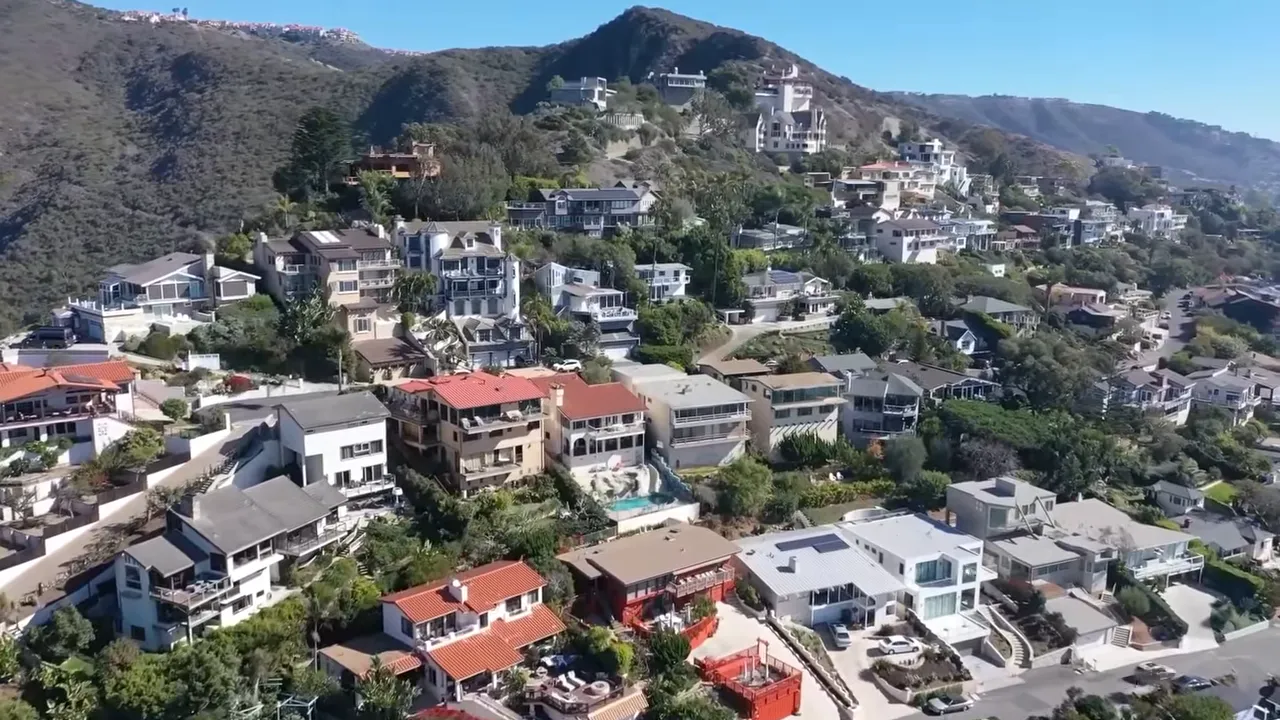
The company controlled roughly 20% of Orange County at the time, giving it an unusual ability to plan at a large scale. The results were hard to argue with. By 2016, Irvine Ranch was the top-selling master-planned community in the United States. Great Park, Rancho Mission Viejo, and Baker Ranch also placed among the nation’s top 20 communities.
For buyers, the appeal was not just a new house. It was the confidence that the larger promise would arrive around them. Schools, parks, shopping, and roads were part of a coordinated plan. Early buyers could reasonably expect that the community would mature around them.
That predictability was not luck. It was design. But the model depended on one crucial ingredient: reasonably affordable land at the outer edge of development. That ingredient is now running out.
Why New Homes Are Harder to Build in Orange County
Orange County is essentially built out, and the math behind new construction is becoming more difficult. Building a home can cost roughly $400 to $600 per square foot before land. Impact fees can add another $50,000 to $100,000 per home before construction even begins. Permitting may take a year or two, while regulatory requirements can account for roughly one-quarter of the total cost of a new home.
This is why the starter-home equation has changed so dramatically. In the 1980s, around 40% of new construction in Orange County was considered entry-level housing. Today, that share is closer to 9%. When land is extraordinarily expensive, it becomes very difficult to build a true entry-level single-family home and make the numbers work.
For the Orange County housing market, this means new supply will not be evenly distributed. The county is not likely to solve its housing constraints simply by opening vast new tracts of land. Instead, demand will favor locations with existing infrastructure, established schools, lifestyle amenities, and a planning advantage already in place.
That is why the conversation should not just be, “Where is the cheapest home this month?” A better question is, “What does this neighborhood offer that cannot be rebuilt easily somewhere else?”
Best Orange County Neighborhoods for Growth
There are three categories that look especially important as the Orange County housing market shifts toward concentration.
1. Closing-window markets
Rancho Mission Viejo’s Rienda is one of the clearest examples of the old master-planned playbook still operating. More than 1,500 homes have sold there since 2022, and Rancho Mission Viejo announced more than 200 additional homes opening in the fall.
The important point is not simply that Rienda has new homes. It is that this may be one of the last genuine opportunities for large-scale, brand-new master-planned construction in South Orange County for the foreseeable future. Rancho Mission Viejo has pushed close to the county’s southern edge. Beyond it, there is very little runway left.
2. Finished-advantage markets
Areas such as Irvine, Great Park, Orchard Hills, and Newport Beach benefit from things that are incredibly difficult to manufacture from scratch: established planning, schools, location, newer housing options, parks, and a recognizable lifestyle. In Irvine and Newport Beach, prices were forecast to grow in the low single digits, which may not sound explosive but matters in a more selective environment.
When an area has finished advantages and little room to add meaningful supply, it tends to hold up better. That does not mean every home in every neighborhood will perform the same way. It means buyers are likely to pay more attention to the complete package.
3. Reinvented land
The replacement for building outward is rebuilding inward. Tustin Legacy, built on the former Marine Corps Air Station (MCAS) Tustin, is a strong example. It brings walkability, mixed-use development, freeway access, and new phases of housing to land that already had a prior use.
The same concept is happening with former mall sites. The old Laguna Hills Mall is being repositioned as a walkable community with homes, retail, and a park. Westminster Mall is being redeveloped into a much larger project with more than 2,000 homes, a hotel, retail, public space, and a park. In Santa Ana, Related California is planning a $3 billion, 41-acre mixed-use district with thousands of residences, retail, and a hotel.
Much of this new product will be rental housing or townhomes rather than detached homes. Still, it matters to nearby homeowners. A dead mall becoming a walkable district with shops, green space, and services is a meaningful new amenity for the surrounding area.
Challenges Facing the Orange County Housing Market
The other side of the Orange County housing market shift is less fun to discuss, but it matters. Areas that win mainly on “affordable enough” or “pretty convenient” may not have the same pricing power when buyers have more choice and more time.
Today’s buyers are often looking for genuinely scarce features:
- Strong schools
- Walkability and trails
- Newer community amenities
- Consistent neighborhood upkeep
- Parks, playgrounds, and green space
- A stronger sense of lifestyle and community
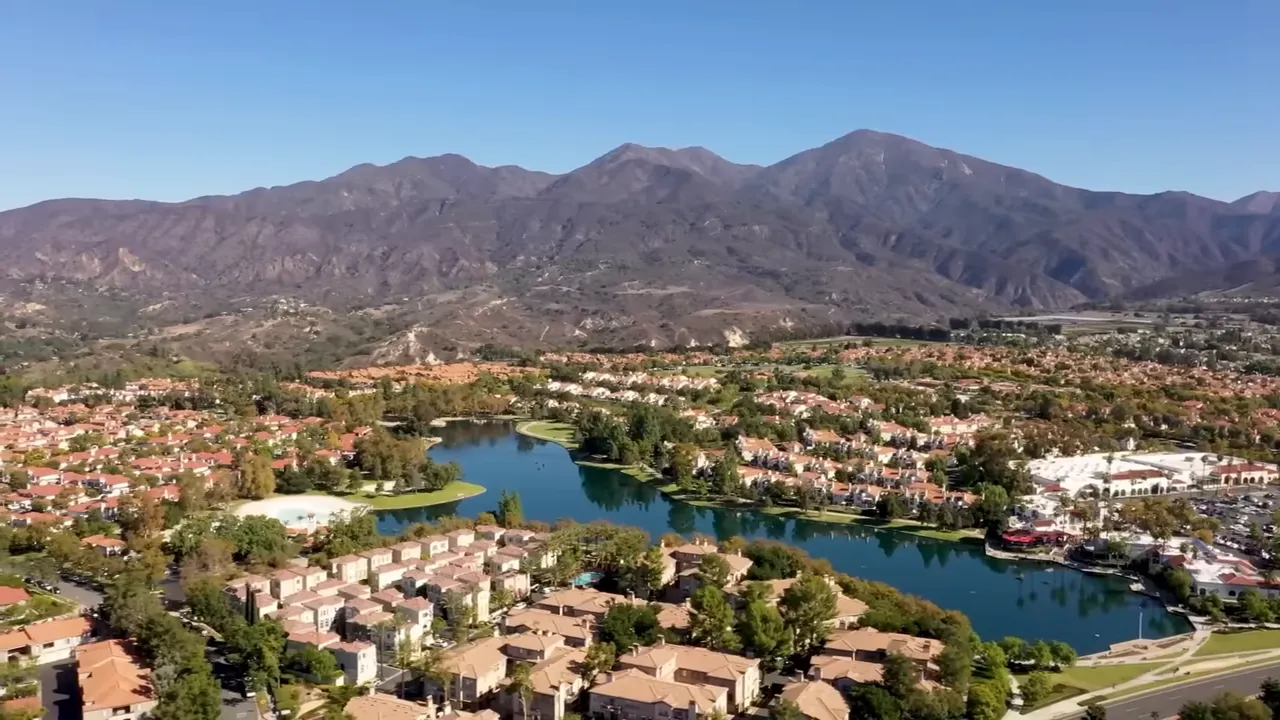
A buyer may love the inside of a home, then walk the surrounding streets and quietly decide against it. Maybe some yards are poorly maintained. Maybe the neighborhood feels worn around the edges. Maybe there are no practical walking paths, no nearby park, and no place that supports day-to-day outdoor life.
That is where well-run homeowners associations can matter. We understand that many people do not want an HOA, and that preference is completely valid. But a good HOA can maintain consistency, landscaping, neighborhood standards, pools, playgrounds, and shared spaces even when individual owners may not make the same choices on their own.
Insurance is another pressure point. California insurance carriers have pulled back, premiums are rising faster than inflation, and older housing stock can face a greater carrying-cost burden. Buyers who are already payment-sensitive may hesitate when insurance costs become uncertain or expensive.
Finally, buyer demand is not as automatic as people assume. California’s population growth has flattened for three consecutive years. When the tide is no longer lifting every area equally, places without a clear differentiator can feel the softness first.
Tips for Orange County Home Buyers
For buyers, the Orange County housing market rewards preparation much more than panic. We do not think anyone needs to rush out and buy a home this week because of a headline. This is a structural shift, not a one-month opportunity. But buyers should be intentional.
Understand the true cost of ownership
Do not look only at the mortgage payment and property taxes. Look at insurance, HOA dues where applicable, maintenance, and Mello-Roos in newer master-planned communities. Mello-Roos is a real cost, not a footnote, and should be part of the budget from day one.
Get fully prepared before finding the dream home
Paperwork, loan readiness, timelines, and offer strategy should be settled before the right home appears. The strongest offer is not always the highest offer. Often, it is the offer that gives the seller the greatest confidence that the transaction will close cleanly.
Buy finished advantages, not only a low price
When comparing options, focus on schools, amenities, location, neighborhood condition, lifestyle fit, and long-term scarcity. The cheapest property this month may not be the best value over time if it lacks the features buyers increasingly prioritize.
Negotiate, including with builders
Many buyers underestimate how much is still on the table. New construction can sometimes offer rate buydowns, closing-cost credits, or other concessions. Resale sellers may also respond to a clean, well-supported offer. Preparation creates leverage.
The Orange County housing market is not simply about opening doors and writing offers. It is about knowing what is coming, understanding the neighborhood story, and positioning yourself before the moment gets competitive.
Tips for Orange County Home Sellers
Sellers need to understand that a nice home in a nice area is no longer enough to automatically command top dollar. In a market where many listings have already taken price cuts, the winning combination is a well-presented property and a clear strategy.
Homes that are priced correctly and prepared carefully can still sell close to list price and move quickly. But days on market have increased year over year, and buyers are taking more time than they did 18 months ago. Overpricing for modest appreciation often leads to a longer listing period, price cuts, and an impression that something may be wrong.
Presentation matters. Industry data often points to a 1% to 3% lift from proper staging. On a million-dollar-plus home, that can be meaningful. A fresh coat of paint, a clean front yard, decluttering, and thoughtful staging can shape the first impression buyers form when comparing your home against a new build down the street.
More competition may also be coming. A growing share of Orange County homeowners now have mortgages above 6%, which could gradually loosen the rate lock-in that has kept inventory limited since 2022. Sellers who act early and strategically may have a clearer runway than those who wait for more listings to arrive.

Near term, the Orange County housing market is expected to remain relatively steady rather than explosive, with low single-digit growth projections and mortgage rates potentially easing into the low 6% range. The larger signal is institutional interest. Orange County rose 11 places to rank 18th nationally as an investment market. Large capital does not usually move based on one exciting quarter. It is making a longer-term bet on where the county is headed.
That is why this moment matters. Orange County is not expanding outward the way it once did. It is becoming more selective, more concentrated, and more dependent on the advantages already built into each neighborhood.
SEARCH NEW CONSTRUCTION HOMES IN ORANGE COUNTY
FAQs About Orange County Housing Market
Is the Orange County housing market about to crash?
No. The current picture is not a collapse. Well-priced and well-prepared homes can still sell quickly, often close to list price. The bigger change is that buyers are becoming more selective, so neighborhood quality, condition, pricing, and strategy matter more.
Which Orange County areas may have the strongest long-term advantages?
Areas with finished advantages are positioned well. That includes neighborhoods with strong schools, good planning, parks, newer amenities, walkability, freeway access, and limited opportunity for new competing supply. Irvine, Great Park, Orchard Hills, Newport Beach, Rancho Mission Viejo, Tustin Legacy, and locations near major redevelopment projects are examples discussed here.
Why does redevelopment matter if most of the new housing is rental or townhome product?
Redevelopment can add parks, restaurants, retail, walkability, and services. For nearby homeowners, a former mall or underused site becoming a vibrant mixed-use district can improve the lifestyle appeal of the surrounding neighborhood and support value.
What should buyers calculate beyond the mortgage payment?
Buyers should account for property taxes, insurance, HOA dues, maintenance, and Mello-Roos where applicable. Total ownership cost matters because rising insurance and community-related expenses can materially affect affordability.
What should sellers do before listing in the Orange County housing market?
Sellers should focus on pricing accurately, improving first impressions, completing high-impact preparation, and creating a deliberate launch strategy. Staging, paint, landscaping, and clean presentation can make a real difference when buyers are comparing several options.
If you’re considering buying in Orange County and want a smart, numbers-based plan for neighborhoods with “finished advantages,” contact me today. Call/Text 602-828-7381 or book a FREE consultation here to discuss your timeline, total cost of ownership, and which areas are most likely to fit your family as this housing market shifts.
READ MORE: Relocating to Orange County? These Housing Markets Are Booming... Others Are Struggling