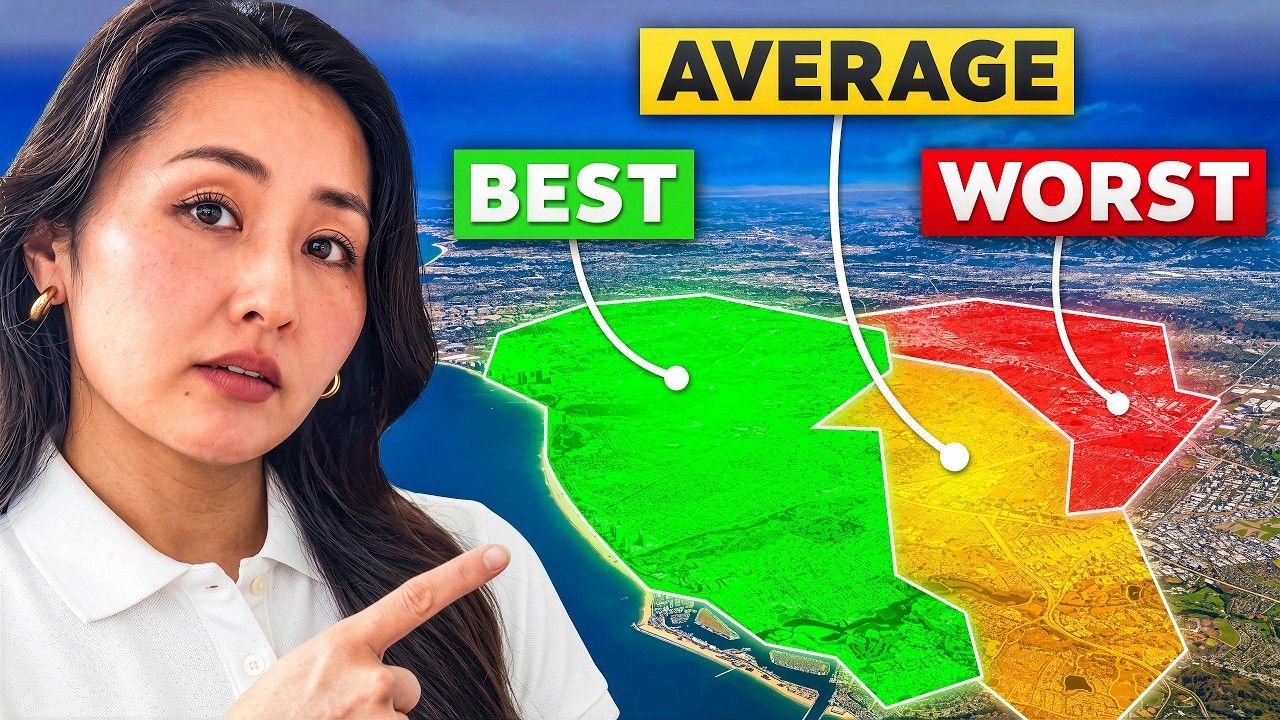
Why Orange County Real Estate Keeps Defying the Market
Yulree Chun Tio and Kai Kim are Orange County real estate advisors offering strategic marketing, skilled negotiation, and white-glove local guidance.
You step off the plane at John Wayne Airport and the first thing you notice is the air. It's dry, warm, smells faintly of eucalyptus and ocean salt. The second thing you notice is the price tag. Median home price here hit $1.3 million this year. That's not a typo. While most American cities are watching prices flatten or fall, Orange County climbed almost 5% year-over-year. More homes sold this year than last. More activity, not less.
I'm Yulri. I'm a local realtor here in Orange County, and my partner Kai and I help families relocate all over OC every single week into cities like Tustin, Fullerton, Newport Beach. After going through the numbers most people never bother to truly dig into, we found eight specific ways this market runs backwards from the rest of the country. If you move to a random city in America right now, odds are that the home prices there are gonna be flat, and you may see that one industry's running the whole local economy, or that the crime's the top story on the local news. Orange County does the opposite of all three.
This isn't about beaches and Disneyland. It's about how a county built from farmland in the 1960s ended up with no downtown, no racial majority, and the safest big city in America for 21 years running. It's about Mello-Roos assessments that catch relocating buyers off guard and fund the exact infrastructure that keeps these cities so desirable. It's about why Irvine grew almost 3% while California lost 230,000 residents a year. Stick with me till the end because number one on this list is a stat that surprises almost every family I work with, and it's probably not the one you're going to guess.
Table of Contents
- Orange County: Home Prices Up While The Rest Of The Country Cools
- Irvine: The Safest Big City In America For 21 Years Running
- Los Alamitos Unified: Math Scores That Look Like A Different State
- Tustin: Converting Marine Corps Land While The State Loses Residents
- Anaheim: $4 Billion OC Vibe And A Year-Round Destination Beyond Disneyland
- Newport Beach: No Downtown In One Of The Wealthiest Beach Cities
- Lake Forest: Population Grows While Ranking Among California's Safest
- Which Orange County City Is Right For You?
- Conclusion
Orange County: Home Prices Up While The Rest Of The Country Cools
Walk through any market report right now and you're going to see pretty much the same story. Homes sitting much, much longer, prices falling flat or falling, and buyers on the sidelines. Most of Orange County didn't get that memo. According to Redfin, the median home price across OC hit $1.3 million this year. That's up almost 5% from the year before. And also, more homes have sold so far this year than the same stretch last year. So there's more activity.
A big part of it comes down to how little room there is left to build. Cities like Irvine, Mission Viejo, Laguna Beach were laid out decades ago with fixed footprints. When demand goes up, it just pushes prices higher instead of spreading out. The other piece is who's buying. A large share of our buyers aren't local. They're relocating from places like the Bay Area, New York, overseas. To them, $1.3 million doesn't feel as steep. I just worked with a family coming from Melbourne. To a family coming from SF or Melbourne, that number doesn't trigger the same sticker shock it would for someone moving from Arizona or Nevada.
The economy here is spread across tech, healthcare, tourism, higher education, and international trade. We have Broadcom and Blizzard in Irvine, Disney and tourism in Anaheim. We've got hospitals and biotech all around. No single industry dominates. That matters because a one-industry town feels every layoff or slow season everywhere all at once. OC doesn't move like that. If tourism slows in Anaheim, tech and healthcare in Irvine and Tustin are still hiring. That spread is a big reason why home values have stayed pretty resilient even when the broader economy gets choppy.
The Diversity You Can't Manufacture
Walk down almost any street in Tustin or Placentia and try to guess which racial group makes up the majority in that neighborhood. It might be hard to do because there really isn't one. OC as a whole doesn't have a racial majority. White residents make up about 37%, Hispanic residents about 34%, and Asian residents about 22%. That's according to census data. Basically no single group crosses that 50% threshold. Also, nearly a third of the county residents were born outside of the U.S.
Yes, that mix is going to show up differently from city to city. But if you zoom out, the county as a whole is one of the most balanced, no-majority regions in the entire state. That's one of the main reasons why I personally love living here and raising my kids here, because we are exposed to so many different beautiful cultures and traditions and cuisines. That's something that's really rare across the US. My team and I have helped families move here from all over the world, Taiwan, Korea, Australia, UK, and every one of them loves the diversity here. We just had a client reach out to us last week to put together a relocation plan from Arizona to here because they really sought out more diversity.
That's not something you can manufacture. It happened because OC was built around major employers and universities that pull in people from all over the world, and that pattern kept compounding over decades.
The Hidden Cost Stack: Mello-Roos And HOA Fees
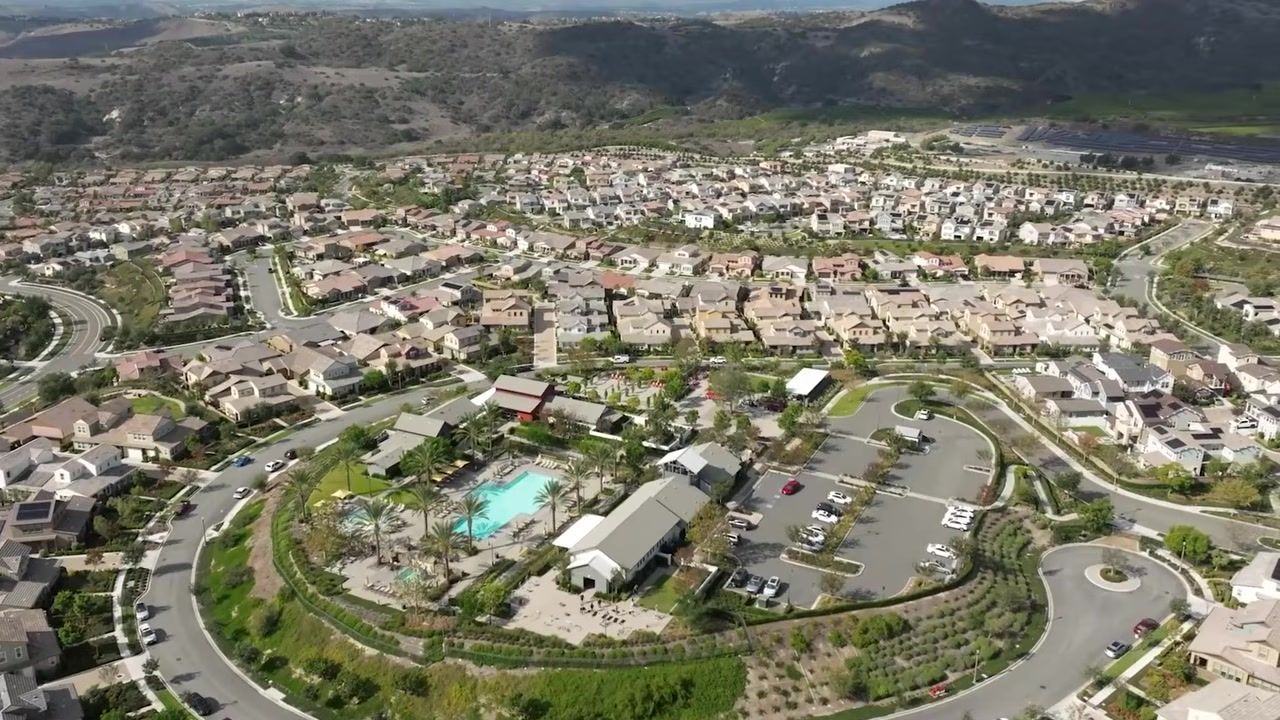
On top of your mortgage and property tax, a lot of newer OC communities carry something called a Mello-Roos . It's a special tax assessment that funds local infrastructure like roads, schools, parks, and it's not based on your home's value. It's a flat assessment that can run anywhere from hundreds of dollars to thousands of dollars a year. Then you add an HOA fee on top of that, since most cities here are built out of planned villages with architectural rules and shared community amenities.
Your all-in monthly costs can look a lot different than the mortgage payment alone suggests. That's the kind of thing that catches relocation buyers off guard. If you're comparing a monthly payment here to what you were paying in New Jersey, for instance, and you only look at the mortgage number, you're missing a real piece of the picture. My team and I sit down with every client and break out the full cost stack, mortgage, tax, HOA, Mello-Roos, before we even write an offer. Getting that wrong is how families end up house poor in a home they otherwise love.
Here's the most important part, the part most people never connect. That assessment isn't just a line item. It's not just, oh, this is expensive. It's actually paying for the exact infrastructure that keeps these cities so desirable and so safe. We're talking about the schools, the police staffing, the streetlights, the traffic patterns designed into a neighborhood before a single house is even built instead of bolted on later or trying to be fixed later.
Irvine: The Safest Big City In America For 21 Years Running
Irvine is one of the largest cities in the country built entirely as a master-planned community. It was laid out village by village from undeveloped farmland as recently as the 1960s and '70s. Instead of one downtown anchoring everything, Irvine works more like a cluster of small towns stitched together under one city name. Each village is going to have its own little hub, its own shops, parks, schools, all within walking distance. Developers designed entire cities from a blank slate instead of retrofitting a century-old core.
For relocation clients, this really trips people up. They ask where downtown is, and then they're surprised to hear that one, there is none, and two, how new some of these cities really are here in Orange County. You drive around looking for it, and you're going to come up empty. That happened because a lot of OC was undeveloped farmland as recently as the 1960s and '70s.
Irvine grew almost 3% and passed Anaheim to become the second largest city in the county. Population grows steadily while still ranking among California's safest cities. This year in Irvine, the violent crime dropped 5% and property crime fell 16%, and zero criminal homicides in the entire city that year. For the 21st year in a row, Irvine has been ranked the safest big city in America . This is based on FBI violent crime statistics. What it's doing is comparing only large cities with 250,000 or more residents.
21 years is long enough that an entire generation of kids have grown up in Irvine without that title ever changing hands. That's not being lucky for a year or two. It's a pattern, and it's been intentionally built into how the city works, funded in part by those same assessments most people don't really know much about or never expected to pay. For every family I've worked with moving here with kids, whether from the Bay Area or Seattle, this is usually the number that closes the deal in their mind. Not the schools, not the price, but this stat right here.
Great Park: Bigger Than Central Park
Right now, Irvine is spending an estimated $1.1 billion to finish out Great Park . We're talking new lakes, a permanent amphitheater, Veterans Memorial. The plan is to turn it into one of the largest city parks in the country, bigger than Central Park according to the OC Business Journal. Normally this kind of public investment happens in cities that are struggling to attract anyone. Not here though. These projects are getting built in a county that's already the most expensive in SoCal because the demand just keeps justifying it.
Long-term clients have shared just how happy they are with the decision they made moving to OC as they continue to see the home values go up, all the while enjoying all the perks like the weather, the nature, and just how well thought out these cities are. We have Broadcom and Blizzard as major employers in Irvine. Tech and healthcare hiring even when tourism slows elsewhere in the county.
Los Alamitos Unified: Math Scores That Look Like A Different State
Compare the average math score from a California public school to a school in Los Alamitos Unified , and you're going to think you're looking at two different states. Los Al Unified has an average math proficiency score of 66%. Now compare that to the overall California school average of 34%. That's almost double. Reading proficiency tells us the same story, 79% versus 47%.
News and World Report ranked three Los Al elementary schools in the top 100 in California, with Weaver Elementary landing at number 12 out of thousands of elementary schools statewide. A big share of it comes down to how these communities were built. Schools were planned alongside neighborhoods, not added later, and local funding goes directly back into the classrooms through parcel taxes most cities don't have.
For families relocating here with kids, this is usually the single biggest factor in deciding which street to buy on, not just which city. Two homes half a mile apart can feed into completely different schools. I've got school-aged kids of my own, so this isn't just a talking point for me. It's very important and the reason why I moved to Orange County. It's the same homework I do every time I help another family figure this out.
School boundaries matter more than city lines. Homes half a mile apart can feed different schools. That's a critical piece most relocating buyers miss until they're already under contract. If you want a full breakdown, ratings, how OC draws its school boundaries, how to evaluate a school beyond the numbers, grab our free OC School Guide using the link in the description. It's one of the most useful things we send to our clients.
Tustin: Converting Marine Corps Land While The State Loses Residents
California has lost residents for years running. That's roughly 230,000 people a year moving out to other states. But several OC cities have gone the other way. Tustin has added residents. I'm going to be straight with you, Orange County as a whole hasn't been immune to the statewide trend. Some cities here have seen slight declines or flattened out in terms of the population. But what makes this county stand out is that the cities that are still building new homes like Irvine and Tustin are pulling in residents even when the rest of the state is declining.
Right now, Tustin Legacy is converting the old Marine Corps land into housing and retail. Tech and healthcare hiring even when tourism slows elsewhere in the county. I talk to families every week who are part of that number, and almost all of them mention the same three reasons: jobs, schools, and safety. Tustin is doing its own version of what Irvine is doing with Great Park. They're converting old military land into neighborhoods and commercial space that didn't exist a decade ago.
Most cities in America have stopped building. A lot of parts of Orange County haven't. Three major hospitals totaling almost $4 billion in construction have been built or are being planned. These projects are getting built in a county that's already the most expensive in SoCal because the demand just keeps justifying it. With this many good options, picking the right one can actually feel a little harder, not easier. Figuring out which OC neighborhood actually fits your family can take months of research on your own. If you want a faster starting point, take our free neighborhood quiz using the link in the description. It matches you to the cities and communities worth touring first, based on what actually matters to you.
Anaheim: $4 Billion OC Vibe And A Year-Round Destination Beyond Disneyland
Anaheim is where Disney and tourism anchor the local economy. Over in Anaheim, the city is actively working on OC Vibe , which is a $4 billion entertainment district going up around the Honda Center. We're talking restaurants, hotels, housing, a new Riverwalk aimed at turning that part of the county into a year-round destination beyond Disneyland. And not to mention the Disneyland updates that are happening too.
Normally this kind of public investment happens in cities that are struggling to attract anyone. Not here though. These projects are getting built in a county that's already the most expensive in SoCal because the demand just keeps justifying it. If tourism slows in Anaheim, tech and healthcare in Irvine and Tustin are still hiring. That spread is a big reason why home values have stayed pretty resilient even when the broader economy gets choppy.
Irvine passed Anaheim to become the second largest city in the county. But Anaheim is still building. The OC Vibe project is one of the largest mixed-use developments in Southern California right now. It's not just about Disneyland anymore. The city is trying to turn that corridor into a place people visit year-round, not just during summer vacation or the holidays.
Newport Beach: No Downtown In One Of The Wealthiest Beach Cities
Newport Beach is one of the wealthiest beach cities in Orange County. You drive around looking for downtown, and you're going to come up empty. A lot of the OC cities have no downtown. You drive around Newport, Fountain Valley, Rancho Mission Viejo looking for it, and you're going to come up empty. For example, Irvine also doesn't have a downtown at all.
Instead of one downtown anchoring everything, these cities work more like a cluster of small towns stitched together. Each area is going to have its own little hub, its own shops, parks, all within proximity. It happened because a lot of OC was undeveloped farmland as recently as the 1960s and '70s. Developers designed entire cities from a blank slate instead of retrofitting a century-old core.
For relocation clients, this really trips people up. They ask where downtown is, and then they're surprised to hear that one, there is none, and two, how new some of these cities really are here in Orange County. Newport Beach has the beach, the harbor, the Balboa Peninsula. But if you're looking for a traditional Main Street downtown with a town square and a historic district, you won't find it. That's not how these cities were built.
Lake Forest: Population Grows While Ranking Among California's Safest
Lake Forest is another city where population grows while ranking among California's safest cities. This is why usually when a city adds population, crime goes up. But cities like Irvine and Lake Forest, population grows steadily while still ranking among California's safest cities. OC cities regularly take up half of the top 10 spots on California's statewide safest cities rankings.
We're talking about RSN, Aliso Viejo, Yorba Linda have each reported zero murders in recent years, and they've landed in the top 10 of safest cities. This isn't a fluke tied to one city. It's a pattern across the master-planned communities that make up most of this county. Lake Forest follows the same blueprint as Irvine and Tustin. Schools planned alongside neighborhoods. Infrastructure funded before the first house is built. Police staffing and traffic patterns designed into the layout from day one.
That's the exact infrastructure that keeps these cities so desirable and so safe. We're talking about the schools, the police staffing, the streetlights, the traffic patterns designed into a neighborhood before a single house is even built instead of bolted on later or trying to be fixed later. Lake Forest is still growing. Still safe. Still pulling in buyers who want both.
Which Orange County City Is Right For You?
When you put all of these eight together, real estate climbing while the country cools, an economy that doesn't just lean on one industry, a building boom on fixed footprints, and many more, you're going to see why Orange County doesn't really compare to anywhere else. I see it every week with relocation clients. Families are always surprised how many other options exist nearby if their plans happen to change. And that kind of variety is great news if you're moving here, but it also means there's no obvious one-city answer.
Here's how to think about the trade-offs:
- Choose Irvine if you want the safest big city in America, village-by-village layout, and you're okay paying Mello-Roos and HOA fees for infrastructure that was designed before the first house was built.
- Choose Los Alamitos Unified if school scores matter more than anything else. Math proficiency at 66% versus 34% statewide. Three elementary schools in the top 100 in California. Weaver Elementary ranked number 12 out of thousands.
- Choose Tustin if you want new construction on converted Marine Corps land, tech and healthcare jobs nearby, and a city that's still adding residents while the rest of California loses 230,000 a year.
- Choose Anaheim if you want to be near Disney and tourism jobs, and you're watching the $4 billion OC Vibe entertainment district go up around the Honda Center.
- Choose Newport Beach if you want a wealthy beach city with no downtown, and you're okay with the price tag that comes with living on the coast.
- Choose Lake Forest if you want population growth and top-10 safety rankings in California without paying Irvine prices.
Trying to figure out which city fits your family out of all that without someone who actually works these neighborhoods every single week, it's how families end up overpaying or landing in the wrong pocket or even the wrong school district entirely. Two homes half a mile apart can feed into completely different schools. That's a critical piece most relocating buyers miss until they're already under contract.

Conclusion
Orange County runs backwards from most American markets. Home prices up 5% while the rest of the country cools. No racial majority. Zero murders in Irvine for 21 years running. No downtown in cities like Irvine and Newport Beach. Population growing in Tustin and Lake Forest while California loses 230,000 residents a year. $4 billion in hospital construction. $1.1 billion to finish Great Park. $4 billion OC Vibe entertainment district in Anaheim. Mello-Roos assessments that fund the exact infrastructure that keeps these cities so desirable and so safe.
That's not being lucky for a year or two. It's a pattern. And it's been intentionally built into how these cities work. For every family I've worked with moving here with kids, whether from the Bay Area or Seattle, the safety stat is usually the number that closes the deal in their mind. Not the schools, not the price, but that stat right here. 21 years is long enough that an entire generation of kids have grown up in Irvine without that title ever changing hands.
Call or text me or use the booking link in the description. Kai and I specialize in relocation into Orange County, and we'll walk you through exactly which city and which street fits what you're actually looking for. We'll break out the full cost stack, mortgage, tax, HOA, Mello-Roos, before we even write an offer. We'll show you how school boundaries work, which villages in Irvine have the shortest wait for Great Park amenities, and which Tustin Legacy neighborhoods are still building out. That's the kind of homework that takes months on your own. We do it every week.
If this was helpful, send it to someone you know who's thinking about making a move to OC.
FAQ: Orange County Relocation Questions
What is Mello-Roos and how much does it cost in Orange County?
Mello-Roos is a special tax assessment that funds local infrastructure like roads, schools, parks, and police staffing. It's not based on your home's value. It's a flat assessment that can run anywhere from hundreds of dollars to thousands of dollars a year. Then you add an HOA fee on top of that. Your all-in monthly costs can look a lot different than the mortgage payment alone suggests. My team and I break out the full cost stack, mortgage, tax, HOA, Mello-Roos, before we even write an offer.
Why does Orange County have no downtown in cities like Irvine and Newport Beach?
A lot of OC was undeveloped farmland as recently as the 1960s and '70s. Developers designed entire cities from a blank slate instead of retrofitting a century-old core. Instead of one downtown anchoring everything, cities like Irvine work more like a cluster of small towns stitched together under one city name. Each village has its own little hub, its own shops, parks, schools, all within walking distance. For relocation clients, this really trips people up. They ask where downtown is, and then they're surprised to hear that one, there is none, and two, how new some of these cities really are.
How do school boundaries work in Orange County?
School boundaries matter more than city lines. Two homes half a mile apart can feed into completely different schools. Schools were planned alongside neighborhoods, not added later, and local funding goes directly back into the classrooms through parcel taxes most cities don't have. For families relocating here with kids, this is usually the single biggest factor in deciding which street to buy on, not just which city. I've got school-aged kids of my own, so this isn't just a talking point for me. Verify current information directly with the district.
Is Orange County really the safest place to live in California?
OC cities regularly take up half of the top 10 spots on California's statewide safest cities rankings. Irvine has been ranked the safest big city in America for 21 years in a row, based on FBI violent crime statistics comparing only large cities with 250,000 or more residents. This year in Irvine, violent crime dropped 5% and property crime fell 16%, and zero criminal homicides in the entire city that year. Cities like Lake Forest, Aliso Viejo, and Yorba Linda have each reported zero murders in recent years. This isn't a fluke tied to one city. It's a pattern across the master-planned communities that make up most of this county.
Why are Orange County home prices going up while the rest of the country cools?
According to Redfin, the median home price across OC hit $1.3 million this year. That's up almost 5% from the year before. More homes have sold so far this year than the same stretch last year. A big part of it comes down to how little room there is left to build. Cities like Irvine, Mission Viejo, Laguna Beach were laid out decades ago with fixed footprints. When demand goes up, it just pushes prices higher instead of spreading out. A large share of our buyers aren't local. They're relocating from places like the Bay Area, New York, overseas. To them, $1.3 million doesn't feel as steep.
What is the OC Vibe project in Anaheim?
OC Vibe is a $4 billion entertainment district going up around the Honda Center in Anaheim. We're talking restaurants, hotels, housing, a new Riverwalk aimed at turning that part of the county into a year-round destination beyond Disneyland. And not to mention the Disneyland updates that are happening too. Normally this kind of public investment happens in cities that are struggling to attract anyone. Not here though. These projects are getting built in a county that's already the most expensive in SoCal because the demand just keeps justifying it.

Stay ahead of trends
Orange County AND BEYOND Market UPDATES
Go beyond the headlines with our deep-dive analysis into local real estate trends and economic shifts. We translate complex market data into actionable advice for homeowners and investors.